
Trace Madison County Owners Backward
The newest recorded deed starts the chain. Its grantor was typically the prior owner. The grantee, in turn, took whatever interest that instrument stated, so log each handoff in order to keep a same-name match from being mistaken for a real transfer.
| Transfer date | Grantor to grantee | Deed type | Book/page |
|---|---|---|---|
| Newest recording | Prior owner to current grantee | Copy exact instrument label | Preserve index reference |
| Next earlier recording | Earlier grantor to that prior owner | Warranty, quitclaim, fiduciary, or other | Verify against the image |
| Older book entry | Names from the reverse index | Copy as recorded | Use Clerk book and page |
Madison County Clerk deeds run from 1786 forward. Use eCCLIX where it applies. That span describes the surviving series rather than every online image, and the Clerk's Richmond or Berea branch supplies offline books and index help.
Madison County's 1786 Deed Depth
Madison County was created in 1785. The Clerk lists deeds, wills, marriages, and county court orders beginning in 1786. Plats begin in 1800. Early chains may mention Milford, the county seat before Richmond took that role in 1798. Search the old administrative place without assuming the land itself moved.
Wills, dower allotments, and court orders can explain an estate transfer. Such a transfer may lack a modern sale pattern. Fiscal Court Orders from 1897 may add road or county-land context. Each is a handoff. It is no substitute deed.
Coverage is not digitization. Madison County's deed series reaches 1786, but older former owners may require Clerk books, microfilm, KDLA, or FamilySearch catalog routes.
Inspect Madison County's Deed Source
The County Clerk recording page confirms that deed searches run by name only, so carry forward exact names, initials, and entity terms. Open the eCCLIX land-record source to begin.
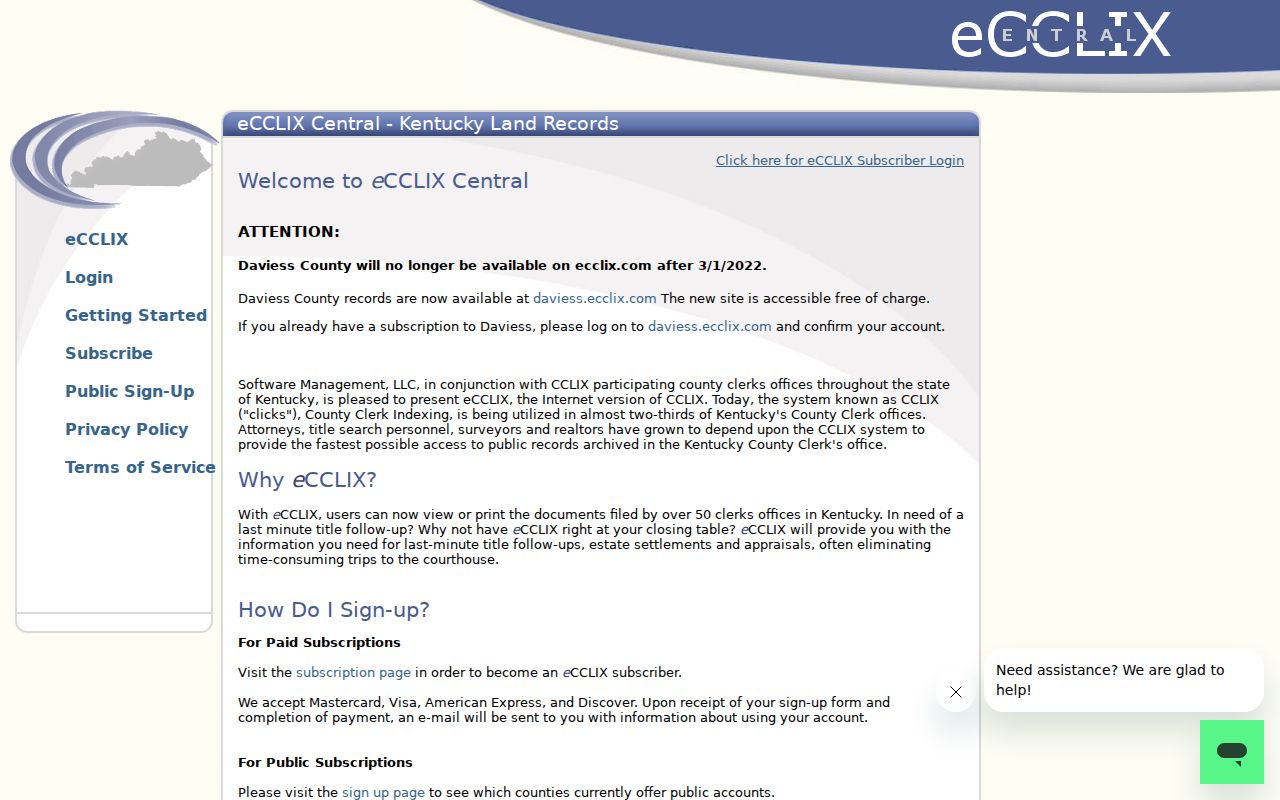
The portal is only an access layer. The deed image and the legal description decide whether the indexed name truly belongs in the chain.
Reconstruct Madison County's Deed Chain
Start with the PVA owner and the newest deed. Then move one recorded handoff at a time, using the legal description to keep the name-only Clerk index from drifting onto someone else's land.
- Find the current grantee's acquisition deed and capture its full reference.
- Read the grantor, legal description, exceptions, and recording date.
- Search that grantor as an earlier grantee and match the tract again.
- Repeat in older indexes and deed books, marking any unresolved link.
- Grantor
- The party conveying the stated interest.
- Grantee
- The party receiving that interest.
- Chain of title
- The linked sequence of conveyances for the same land.
- Reverse index
- An index used to locate a party on the receiving side.
A quitclaim passes only what the grantor actually holds. Neither its label nor a warranty deed's covenants alone proves complete title.
Follow Madison County Parcel Splits
A new PIN does not always break the ownership chain. One plat can divide a parent tract. It can create lot and block descriptions, reserve easements, and establish common areas. The Calley sample at Curtis Pike shows six tracts. It also records bearings, easements, restrictions, and survey certification.
Preserve the parent owner and the plat date. Keep the book and page, lot, block, access easements, and first deed out. Compare statuses carefully. Proposed, preliminary, amended, and recorded documents do not carry the same standing.
Resolve Madison County Family Names
The Madison County Public Library research collection holds a marriage index covering 1786 through 1956. It also offers obituaries, cemetery inventories, and local newspapers. A maiden name may hide there. So can an executor, heir, or spelling variant that restores a broken chain.
A family source alone proves nothing. Confirm the transfer through the Clerk, a probate record, or the deed itself. EKU Special Collections and KDLA can help route older material when a scan is missing.
Preserve Madison County Transfer Details
For each deed, record everything. Copy the parties, instrument type, signing and recording dates, book and page, consideration if shown, legal description, exceptions, signatures, and clerk certification. Old indexes vary. Keep both spellings when the index disagrees with the image.
Assignments, releases, liens, and mortgages may explain the trail. They add no owner. A deed touching only part of a tract must be tied to its acreage and exceptions to keep a long name list connected to the same land.
The Clerk's published 2020 schedule listed a certified copy at $5 plus $0.50 per page after three pages. Confirm the current charge. Schedules go stale.
Bridge Madison County Probate Transfers
A former-owner chain can look like it stops. That happens when land passed through an estate rather than an ordinary sale. Madison County's wills and court orders both begin in 1786. Dower allotments name a surviving spouse. They also show how land was divided under older practice. Search the decedent, spouse, heirs, administrator, executor, commissioners, and tract description.
Keep the order or will reference beside the next fiduciary deed. The probate paper explains authority. The recorded conveyance shows which property interest moved. A death notice, obituary, or cemetery entry may supply a date or alternate name, but it cannot replace either official record.
When no deed image is online, document the exact missing book, page, index, or instrument. Then let the Clerk's genealogy page, the KDLA county inventory, and the FamilySearch catalog route the search to surviving material. Leave an unresolved handoff marked. Never guess an heir.
Mark Madison County Chain Limits
Research can reach the county's earliest deed era. Record the last verified book, page, party, and description. A missing online image is a routing problem, not permission to invent a transfer.
Use the chain lawfully. Madison County former-owner records support house history, estate work, and purchase diligence. Never use them to track, harass, or harm a living person.
Stop at the legal description. Bearings, acreage, lot or tract labels, exceptions, and deed references show whether each former owner belongs to the same property.