
Identify Who Owns Madison County Property
Madison County's most dependable ownership method runs three official sources in sequence. The PVA ties an address to a parcel and a tax-roll name. County GIS confirms the parcel actually fits the place. The County Clerk's name-only land index then confirms the latest grantee, the person or entity that received the deed. Record the tax year and the recording date beside whatever answer you get.
- Enter the street address in the Madison County property search. Copy the PIN, displayed owner spelling, situs address, mailing address, and assessment year.
- Match that PIN and location to the county parcel layer. A postal city or ZIP alone does not settle whether land lies in Richmond, Berea, or unincorporated Madison County.
- Search the displayed owner in the County Clerk's land-record system. Compare the latest deed's grantee, date, book and page, and legal description with the parcel.
- If a company holds title, use the Kentucky Secretary of State record to confirm the entity identity. A registered-agent address is not proof that the agent owns or occupies the parcel.
No single screen settles a who-owns question. This chain builds confirmation instead. When sources disagree, keep the mismatch intact and look into sale timing, probate, name variants, or a parcel split.
Madison County PVA Owner Route
The Madison County PVA offers a free basic lookup. It covers ownership and assessed value through Name, PIN, Company, Parcel, Account, Subdivision, and Address search modes. Address is the practical start. Company mode matters when the tax roll lists an LLC or corporate name.
Each parcel is assessed annually at fair cash value. Physical exams come at least once every four years. That schedule makes the roll a strong lead on the current owner, but the PVA records no deeds and guarantees no title. A mailing field can point somewhere other than the land, and it never shows who lives at the situs.
The image shows the official PVA property-search screen itself. It shows where a Madison County owner inquiry starts. The screen documents the official starting point rather than any specific parcel result or title conclusion. Open the PVA property-search source to compare it with the screen shown.
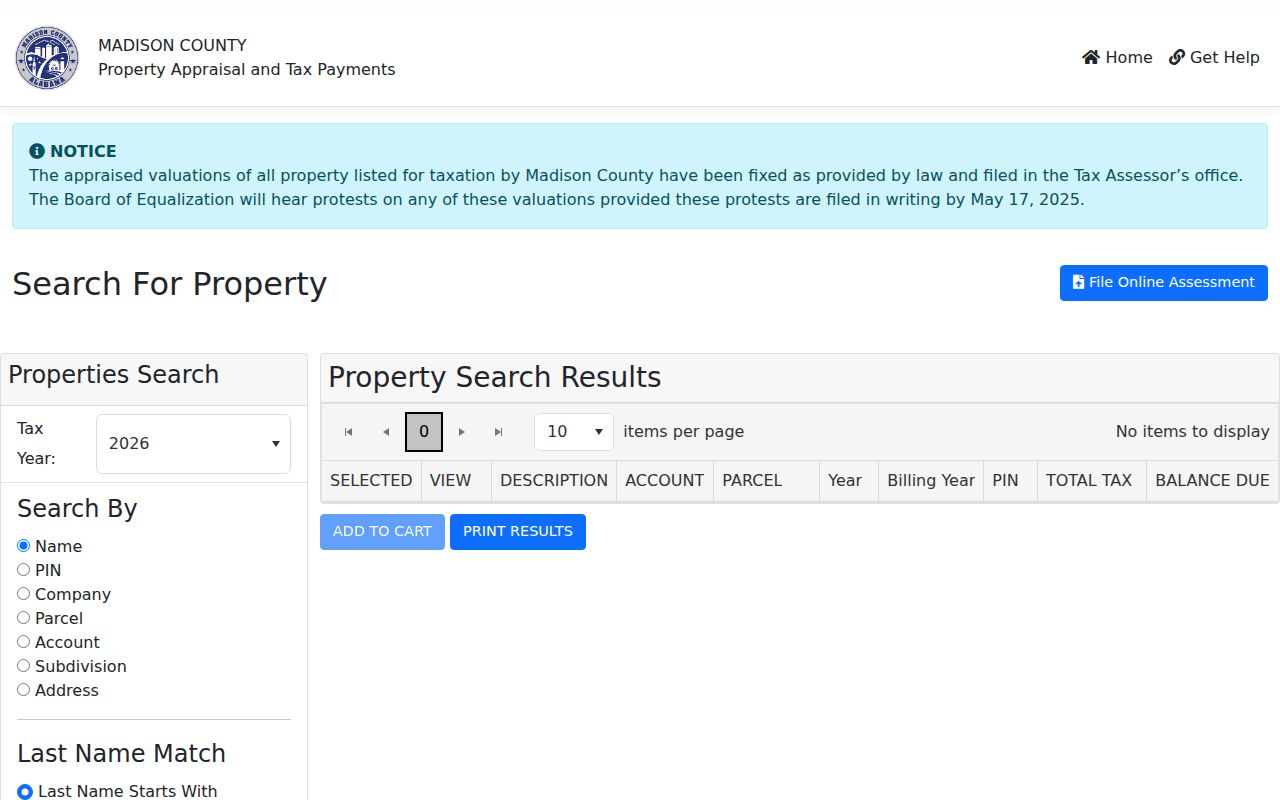
The image shows the official entry point only.
Pivot From Address to Clerk Name
The Madison County Clerk recording page is clear on one point. Recorded documents are searchable by a person's name only. That local rule forces a first step. Translate the address into a likely owner name through the PVA before going further. Then search the precise grantee spelling on the newest deed. Test the grantor plus useful variants.
eCCLIX is a paid Central Kentucky land-record service. The Clerk links to it for online access. Even so, the Richmond and Berea branches stay useful for old volumes, a missing image, or help choosing the right index entry. Historic deeds run from 1786 to the present. That span does not mean every image is online.
Note: A deed series date and an online image date measure access differently.
Where Madison County Ownership Appears
Three different records can carry a Madison County owner name. Each serves its own legal or administrative purpose. Compare them instead of blending them, since the source date and the parcel's legal description matter as much as the name itself.
| Where ownership appears | What it gives | Currentness and access |
|---|---|---|
| PVA tax roll | Owner spelling, parcel identifiers, situs and mailing context | Free basic search; tied to the assessment year |
| County Clerk deed index | Grantor, grantee, recording reference, and legal description | eCCLIX or Clerk branches; newest deed is the confirmation step |
| County parcel GIS | Parcel geometry, labels, and map context | Live map context; not title or survey proof |
| Kentucky business search | Entity name, status, officers, and registered agent | Identity context for a company, not land ownership proof |
An owner of record is the name an official record carries for its own purpose. A deed grantee received the interest that instrument describes. Title is different, meaning the full bundle of ownership rights, which can require review beyond one public index. Situs is the physical address. A mailing address is only where notices go.
Madison County January Owner Lag
Madison County assessments are dated January 1. That timing creates a currentness gap in the property records. Buy a parcel after January 1. The old owner's name can stay on the tax bill until the next roll. The buyer may show up only as a "c/o" entry. Or the new name may not appear at all. A mismatch like this does not mean the former owner still holds title.
Check the deed recording date against the assessment year. If the latest grantee and the PVA name disagree, a few explanations fit. The transfer may have happened after the roll date. An estate or name change may still be processing. Or the parcel may have been split. The current deed remains the stronger ownership check in Madison County.
Trace Madison County Trust Names
Trust and entity names make a who-owns search less direct. Madison County DocAlert gives a telling example. A trust styled with a year may be indexed without that year. Each material name variant may need its own search. Preserve punctuation and abbreviations exactly as the PVA and the deed show them.
For an LLC, the Kentucky business search can separate similarly named entities. For a deceased owner, a clean sale deed may be absent. Wills, court orders, dower records, and fiduciary deeds can explain why. Those records help trace authority; they never replace the recorded property instrument.
- Owner of record
- The person or entity named by a record for its stated date and purpose.
- Grantee
- The party receiving the interest described in a deed.
- Situs address
- The physical property location, separate from an owner's mailing address.
- Title
- The legal ownership rights, which one index entry alone cannot establish.
Madison County Owner Access Options
The PVA office does more than run a website. Its counter sits at 135 W. Irvine Street, Suite 103, in Richmond. Parcel-card questions also go by phone at (859) 623-5410. The Clerk keeps two recording branches, one at 321 N. Madison Avenue in Richmond and one at 304 Chestnut Street in Berea. Call ahead when the deed image or old book you want is not online.
Some records fall outside standard datasets. Historic files and nonstandard PVA material can be requested through Madison County's open-records process. Name the records in plain terms. Kentucky agencies ordinarily respond within five business days, though producing copies can take longer, and a routine deed copy still belongs with the Clerk's normal record and copy process.
Limits on Madison County Owner Findings
An owner lookup has firm limits. It does not surface every person holding a possible legal interest, and it cannot prove who actually occupies the property. Easements, liens, probate authority, marital interests, and unrecorded claims may demand more records or professional title work. GIS lines and labels help with location, not ownership.
Use owner records with care. A Madison County tax-roll name is not a title search. Ownership may rest in a trust or company, and public information must never be used to harass or harm anyone.
Privacy protections also shape what appears. Kentucky's Safe at Home program can substitute an alternate address in public systems for eligible survivors. The program cautions that a real-estate purchase or sale may still surface in public records. Keep personal details out of any public summary.